


Scrubbers – Controlling PM Emissions 

Purpose

Investigate how emissions of PM (particular matter, black carbon, soot, etc) can be further reduced by optimising the aftertreatment system especially the exhaust gas scrubber system but also including EGR and SCR systems, additionally the influence of the fuel was analysed.

Propose robust and practical methods for measuring PM and BC emissions.

Outcome of project

The results generated in this project is basically unique, never before in history has a study this big and complicated been performed on the exhaust gas from several large engines with different types of fuel and measured with different kinds of equipment. The results will, as they are published in papers to IMO, have direct influence on future maritime legislation.

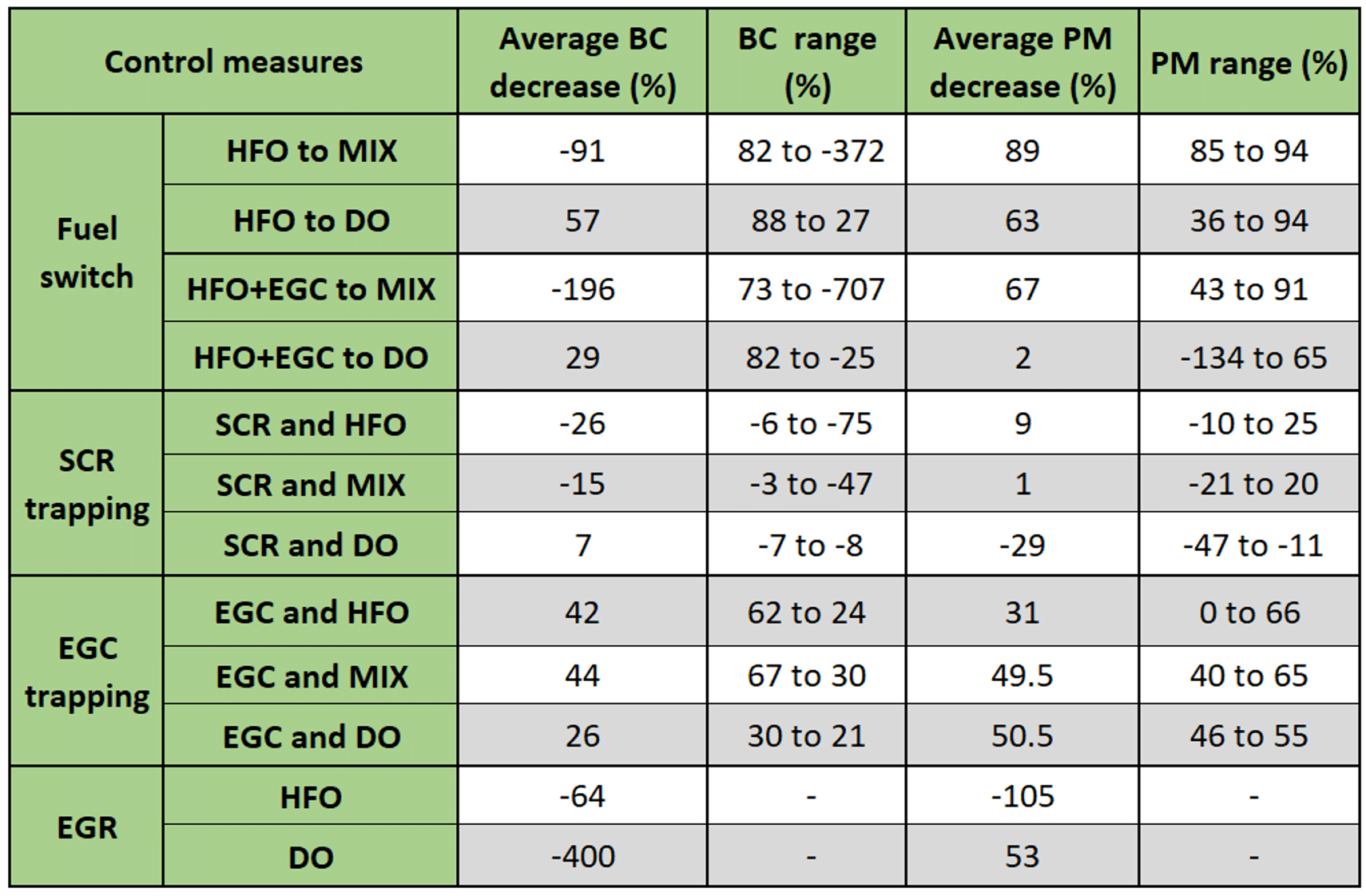
  • EGC removes, on average, 42% of the PM emission and 40% BC emission.
  • Shifting fuel from HFO to DO decreases the BC emission with 57 % (4-stroke) and 70% (2-stroke). However, shifting from HFO with EGC to DO without EGC decreases the BC emission with 29%, on average.
  • Shifting fuel from HFO to a MIX fuel (0.5% sulphur) increases the BC emission with 91 %. Furthermore, shifting from HFO with EGC to MIX fuel without EGC increases the BC emission with 196 %, on average.
  • Changing from HFO with and EGC to the MIX fuel increases the BC emission largely at low engine loads (25 and 50 %), increasing the emission with 707% and 148%.
  • Changing from 4-stroke to 2-stroke on DO reduced BC with 84%. Comparing 75% load for 4-stroke with 50% load for 2-stroke.
  • On DO EGR increased BC with 400% and PM with 64% at 50% load.
  • On HFO EGR increased BC with 100%, but PM was reduced with 53% – again at 50% load. The reduction on HFO was caused by a reduced sulphur conversion to PM.

To give a better overview of the results from the project a table have also been inserted as seen in the following:
Partners

  • Alfa Laval Aalborg
  • MAN Energy Solutions
  • FORCE Technology (as sub-supplier)